








SpaceX has caught a Starship spacecraft returning from orbit for the first time, lowering it into the arms of its launch tower in Texas after a flight of about 22 hours. The capture is a landmark for the company’s plan to make the largest rocket ever flown fully reusable.
The spacecraft, known as Ship 42, lifted off from Starbase in South Texas on Friday evening aboard the fifteenth full Starship test flight. It circled the Earth 14 times, deployed 26 of SpaceX’s latest Starlink internet satellites, and then fired its engines on Saturday afternoon to begin the journey home.
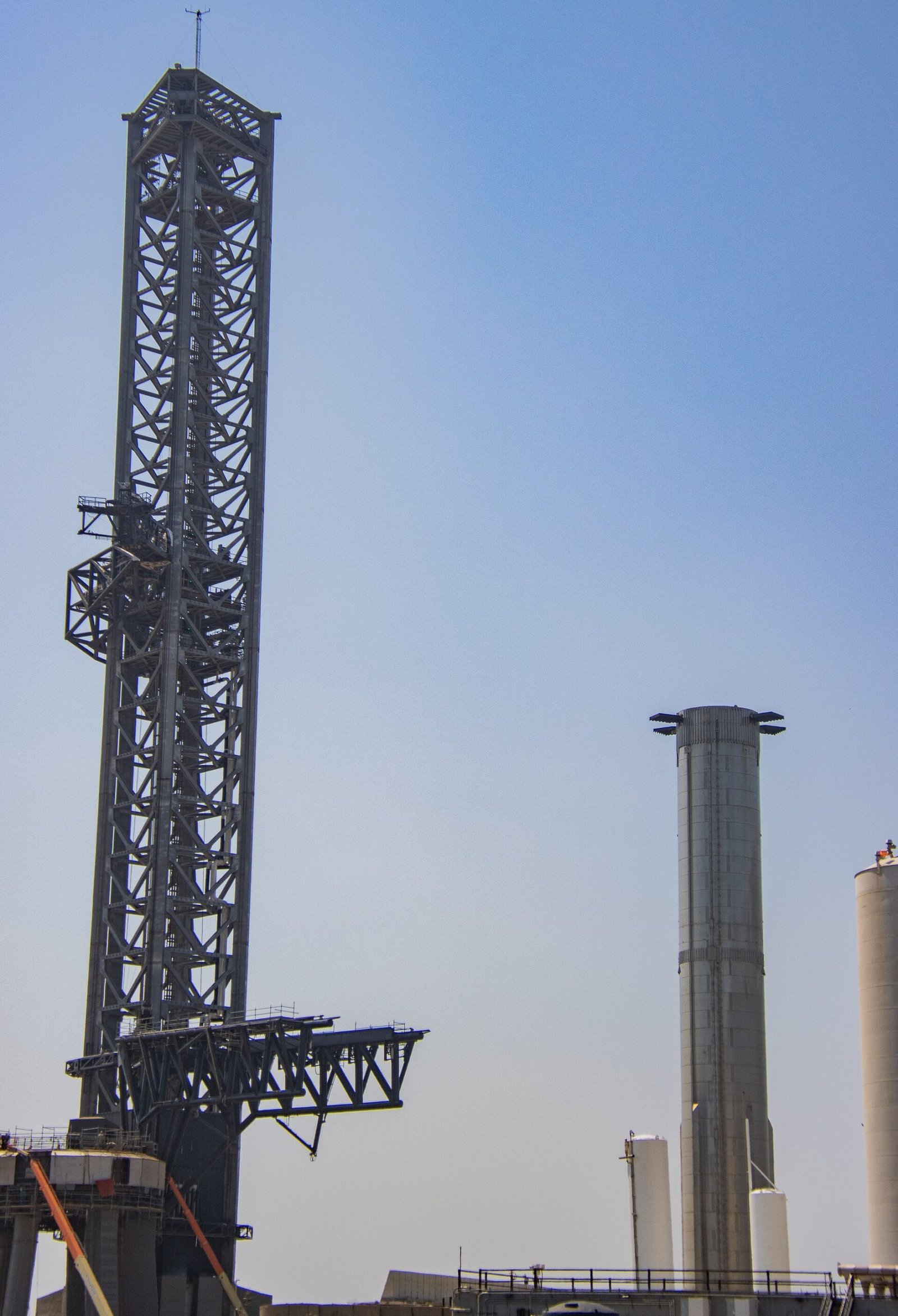
The final moments were the ones SpaceX had never attempted before. The bullet-shaped craft plunged through the atmosphere, flipped end over end in a “belly flop” manoeuvre, then swung its engines downward to slow and slide precisely between the two giant steel arms of the launch tower, nicknamed “chopsticks”. The arms closed around it and held it upright on the pad.
“Mechazilla catches Starship!” the company announced, as the stainless-steel spacecraft came to rest where its journey had begun a day earlier. It was the first time any orbital-class rocket stage has been caught after returning from space. SpaceX had previously caught Super Heavy boosters with the same tower, but never the spacecraft itself.
The triumph was only half of what the flight set out to achieve. The mission had aimed for a first double catch, recovering both the booster and the spacecraft. Instead, the Super Heavy booster was diverted into the Gulf of Mexico minutes after liftoff on Friday, where it exploded. SpaceX said its engines stopped firing too soon on the way back down, and its guidance system, sensing it was out of position for a catch, triggered an automatic diversion. Elon Musk said a “slight underperformance” of the engines was behind the failure, and the company is still investigating the cause.
SpaceX officials said the catch demonstrates the full reusability of Starship, which is central to the company’s ambition to fly the rocket again quickly and cheaply, and to NASA’s plans to use it to return astronauts to the Moon. The combined booster and spacecraft stand 407 feet (124 metres) tall, the largest and most powerful rocket ever flown.
The company expects to begin launching Starships from Florida’s Kennedy Space Center within the next few months. The next test will be watched closely: SpaceX must still show it can recover both stages on the same flight, and turn them around fast enough to fly again.
Sources: Associated Press, “SpaceX’s Starship returns from orbit and is captured by launch pad arms in a dramatic first”, https://phys.org/news/2026-11-spacex-starship-orbit-captured-pad.html ; Scientific American, “Can SpaceX catch its Starship?”, https://www.scientificamerican.com/article/can-spacex-catch-its-starship/ ; USA Today, “SpaceX catches Starship for first time in Texas, making space history”, https://www.usatoday.com/story/tech/space/2026/11/14/spacex-flight-15-catches-starship-makes-history/92785462007/