







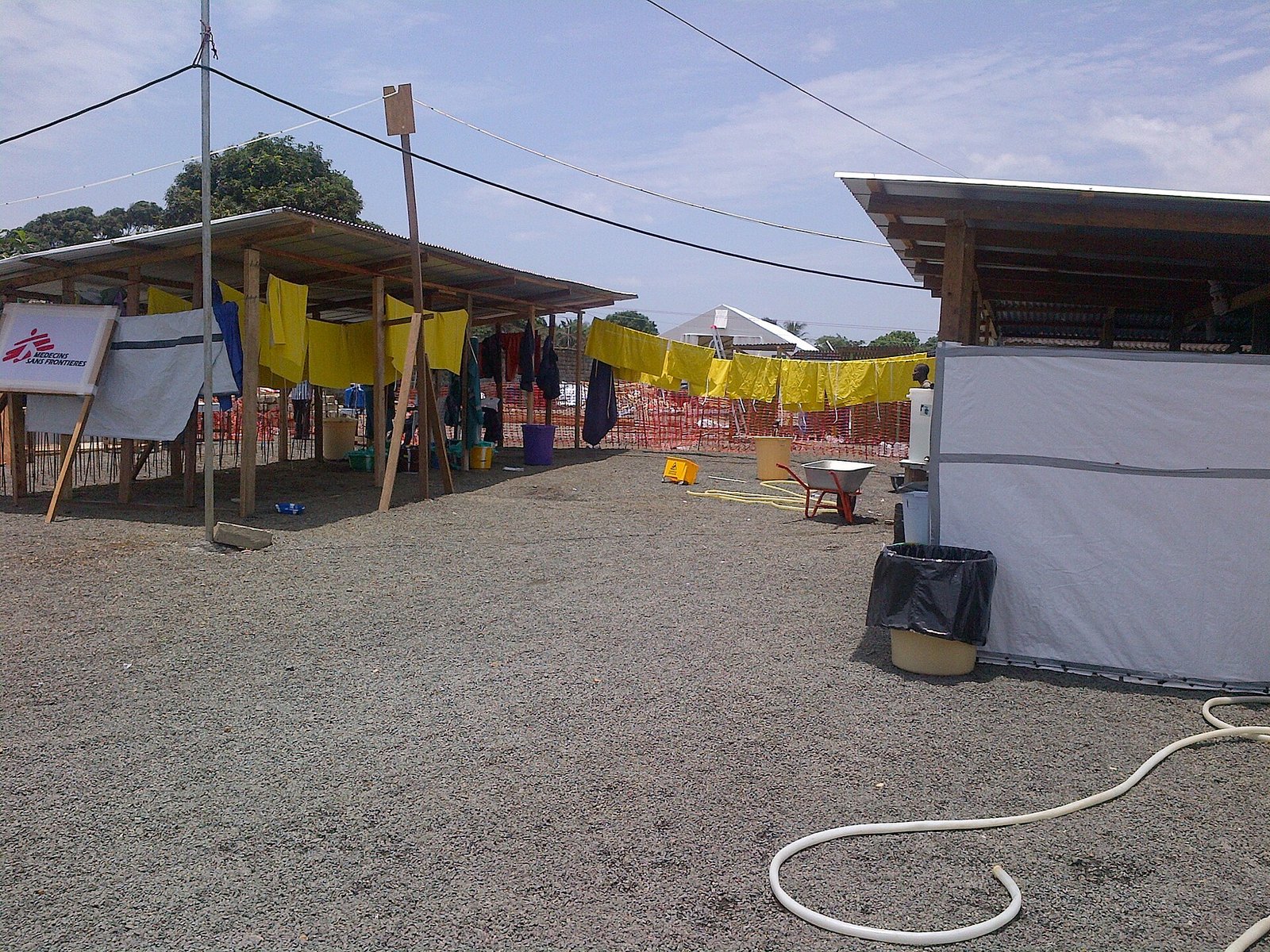
The true death toll from Congo’s Ebola outbreak is far higher than official figures suggest, according to a Reuters investigation that counted the dead by the graves they left behind.
Reuters analysed satellite imagery of the three main cemeteries in Bunia, the city at the centre of the outbreak in eastern Congo, and compared the number of new graves dug this year with the preceding epidemic-free year. In early November, the city had recorded more than 1,000 excess deaths, over 50 per cent higher than the official Ebola toll of 707.
The gap was widest in the outbreak’s early months. By late June, Bunia had seen more than 580 excess deaths, seven times the official toll at that point; by September the figure had risen to about 950, double the official count. At Nyamurongo, the city’s largest cemetery, burials rose from an average of 2.4 a day before the outbreak to more than nine a day in June, before falling to 4.5 a day by early November.
A similar pattern emerged in Mongbwalu, the gold-mining town to the north where health authorities believe the outbreak began. By August, excess deaths there alone were 25 per cent higher than the official Ebola toll for the town and its surrounding villages, and cemetery workers identified several hundred more graves across seven other burial sites they said belonged to Ebola victims.
The undercount has a clear cause: the outbreak was detected late. Patients arrived at Mongbwalu’s hospital in early May with symptoms that looked like malaria or typhoid, then deteriorated rapidly and died. Samples were initially tested for the wrong species of Ebola, and it was not until mid-May that results came back positive for Bundibugyo, a rare form of the virus for which there is no treatment or vaccine. By the time officials formally declared the outbreak on 15 May, local health authorities had already recorded 100 unexplained deaths in the town over the previous six weeks, many with symptoms associated with Ebola, and many patients were buried without ever being tested.
Health officials who spoke to Reuters said the findings were plausible. Jean-Jacques Muyembe, head of Congo’s National Institute for Biomedical Research, said an early gap between recorded deaths and the true toll was “logical” because the outbreak was detected late, while Yap Boum of the Africa Centres for Disease Control and Prevention said excess mortality is often highest early in an outbreak, before testing and surveillance systems are fully in place. The World Health Organization’s Olivier Le Polain said: “We continue to find evidence that a proportion of cases and deaths were never detected.” Congo’s health ministry did not respond to requests for comment.
The findings come as the outbreak, formally declared on 15 May, has infected more than 11,500 people and killed over 5,500 across the country, according to official figures. Data presented by Africa CDC on 5 November suggests detection remains weak and the outbreak is not yet under control, six months on: more than 60 per cent of Ebola deaths were still occurring outside health facilities, and fewer than 15 per cent of new confirmed cases came from known contact lists.
Note: not all excess deaths can be directly attributed to Ebola, and the figures are Reuters’ own analysis rather than an official count. Some may reflect indirect effects of the outbreak, such as people with other illnesses avoiding hospitals for fear of infection. Reuters also cautions that its estimate is likely conservative, as it did not capture smaller burial sites across Bunia.
Sources: Reuters, “Fields of graves: Hidden deaths reveal scale of Ebola disaster”, 23 November 2026 (https://www.reuters.com/investigations/fields-graves-hidden-deaths-reveal-scale-ebola-disaster-2026-11-23/).