








Researchers in Hong Kong have built a cooling material inspired by honeycombs that survived more than 100 million operating cycles in laboratory tests, bringing gas-free refrigeration a step closer to everyday use.
The team at the Hong Kong University of Science and Technology (HKUST) designed a structure made from a shape-memory alloy, a metal that absorbs and releases heat as it is repeatedly squeezed and released. Known as elastocaloric cooling, the technique is a solid-state alternative to conventional vapour-compression refrigeration, which relies on energy-hungry compressors and refrigerants that can contribute to global warming.
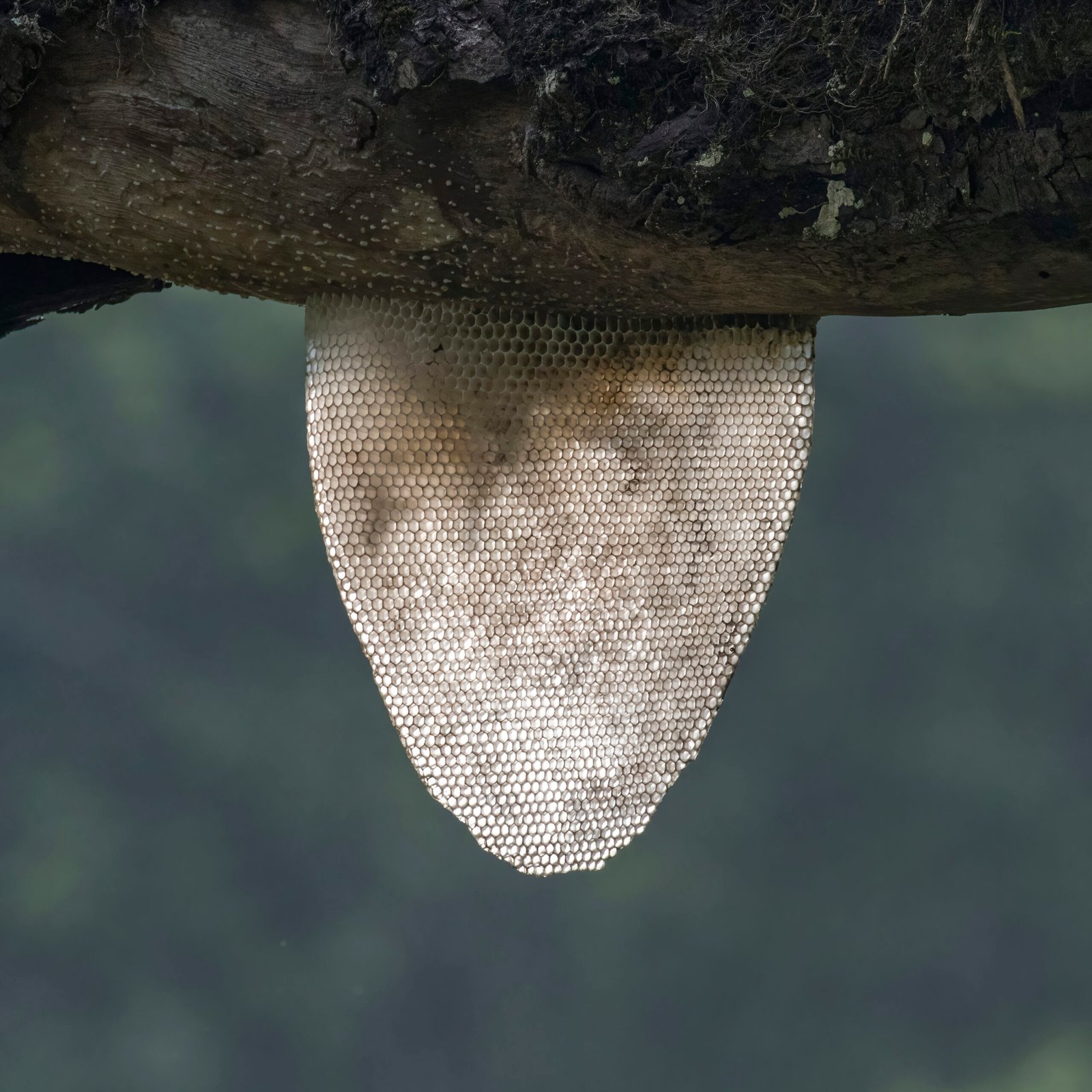
Until now, the technology has been held back by a manufacturing dilemma. Existing refrigerant structures are usually made from commercial tubes, plates and wires, or cut by slow and expensive electrical discharge machining, and they are prone to fatigue failure and buckling after repeated use. The HKUST team tackled the problem by stamping thin commercial alloy sheets into small porous chips, about 100 a minute, and stacking them into a tubular structure modelled on the layered architecture of honeycombs and bamboo.
The stacked design proved strikingly durable. Because the structure is assembled from individual chips rather than a single long tube, the interfaces between neighbouring chips help stop cracks spreading and prevent the kind of catastrophic splitting that has plagued earlier designs. In tests the structure withstood more than 100 million cycles, which the researchers say corresponds to an estimated service life of over ten years under the tested conditions. That figure is a test-based estimate, not a record of a decade of use in a real home.
A prototype built from a 30-millimetre unit containing 200 stacked chips achieved a maximum temperature span of 11.7 degrees and a specific cooling power of 3.85 watts per gram. The stamping process is also more than 100 times faster and 95 per cent cheaper than the wire-cut machining method it replaces, according to the university.
Professor Sun Qingping, who led the study, said cost-effective manufacturing was the key question for whether elastocaloric cooling could move from laboratory prototypes to mass-produced products. The structures, he said, must deliver fast heat transfer, extremely high mechanical reliability and low manufacturing cost at the same time, something the field has long struggled to achieve in a single design.
The work, published in the journal Science, is the team’s third breakthrough in under a year. In January it reported the world’s first sub-zero elastocaloric freezer, capable of reaching minus 12 degrees Celsius, and in August it unveiled a zero-degradation cooling device using a fatigue-resistant alloy. The team has filed multiple international patents and says it will now work on improving heat transfer, building more energy-efficient actuation systems and developing higher-performance alloys.
Sources: Hong Kong University of Science and Technology, https://hkust.edu.hk/news/hkust-researchers-develop-low-cost-elastocaloric-refrigerant-structure-over-100-million-cycle ; Tech Xplore, https://techxplore.com/news/2026-11-honeycombs-cooling-million.html ; Science, DOI 10.1126/science.aeh7074.