







Two major scientific reports have warned that temporarily overshooting the 1.5°C global warming limit will bring large-scale and in many cases irreversible damage to the Earth’s ice, and that only rapid action can still contain the worst of it.
The reports — Overshoot and the Cryosphere: Averting Global Meltdown, produced by the International Cryosphere Climate Initiative (ICCI) in coordination with the UN Environment Programme (UNEP), and State of the Cryosphere 2026: The Cost of Overshoot — were released on 2 November, a week before the COP31 climate summit opens in Antalya, Türkiye, on 9 November. Together they draw on more than 80 polar and mountain scientists.
Their central warning is stark: the cryosphere — the parts of the planet covered by ice sheets, glaciers, sea ice, snow and frozen ground — does not forgive even a temporary breach of the Paris Agreement target. Global warming has already reached 1.37°C above pre-industrial levels, and the 1.5°C threshold could be exceeded around 2030, according to the European Copernicus network.
The consequences would reach far beyond the polar regions. Ice sheets are already melting six times faster than 30 years ago, the reports note, and Switzerland has lost 20 per cent of its glacier ice in the past five years. If warming were to reach 2.8°C into the next century, sea levels could rise by up to five centimetres a year by 2150, against about 0.45 centimetres today, while thawing permafrost could release as much carbon dioxide each year as the United States, the world’s second-largest polluter.
Much of that damage would not be undone even if temperatures later fell back. “There are no good outcomes in exceeding 1.5°C,” said Dr James Kirkham, coordinating lead author of Overshoot and the Cryosphere and chief scientist at ICCI. “To contain the global fallout and damage from ice loss in the world’s polar and mountain regions, overshoot needs to be kept to the absolute minimum. Temperatures must be returned to well below 1.5°C again as quickly as possible to reduce the risks.”
The reports are not without hope. A return to 1.5°C and below could slow sea-level rise to a level coastal communities can adapt to, and could even restart some regrowth of sea ice and glaciers within decades to centuries. But that path requires emissions to fall by at least 5 per cent a year starting now, reaching net zero greenhouse gas emissions by mid-century, alongside deep cuts in methane and black carbon and a fast phase-out of fossil fuels.
“Global ice is unforgiving in its response to even temporary overshoot,” the reports warn. “Faster transition from fossil fuels means the difference between manageable losses — and a planet overwhelmed by serial disasters like that in Nepal in August.”
ICCI director Pam Pearson put it more plainly: “When you miss an exit on the highway, you don’t abandon plans to get to where you really need to be — you take your first chance to turn back. Continuing full speed ahead just makes things worse.”
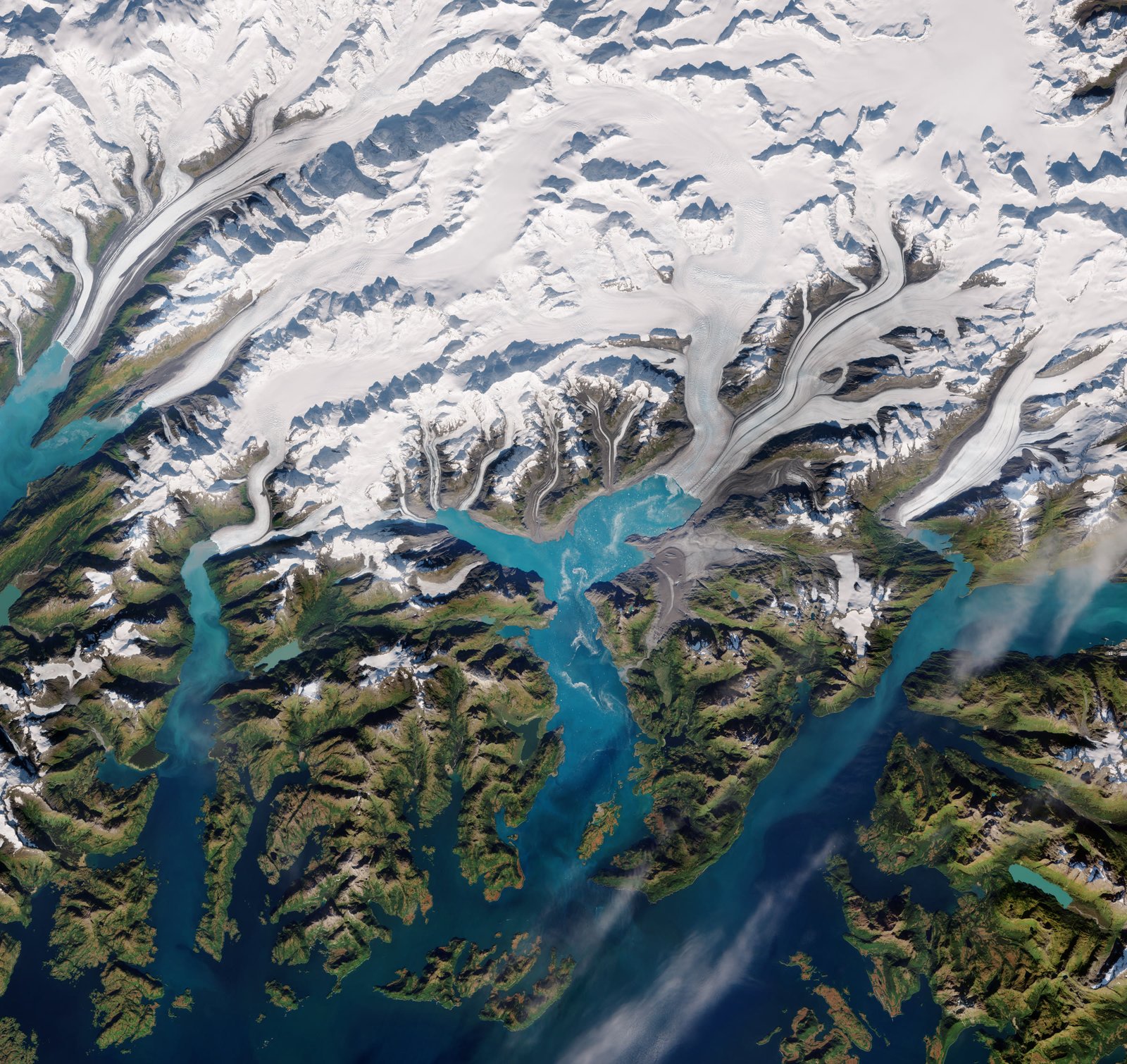
Note: the featured image is a satellite image of Alaska’s Columbia Glacier from September 2023, not a photograph from November 2026.
Sources: International Cryosphere Climate Initiative, “State of the Cryosphere Report 2026 – The Cost of Overshoot” (https://iccinet.org/statecryo26/); Emerging Risks, “World’s climate hopes in danger of melting away warn experts”, 4 November 2026 (https://www.emergingrisks.co.uk/worlds-climate-hopes-in-danger-of-melting-away-warn-experts/).