








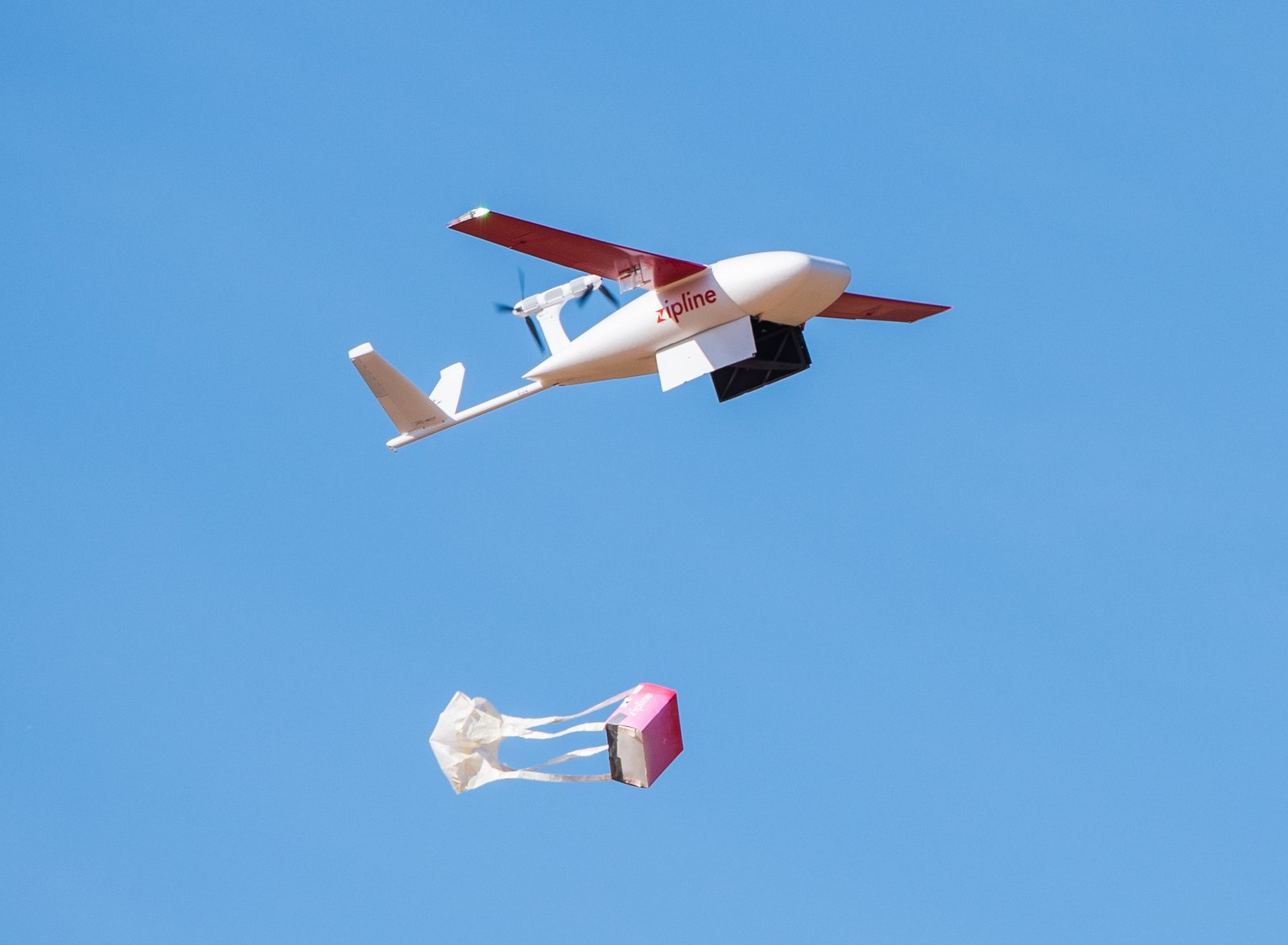
Drone delivery company Zipline has raised $1.5 billion at a $21.5 billion valuation, nearly tripling its worth in about ten months as investors bet that autonomous aircraft are about to move from novelty to everyday infrastructure.
The US company announced the fundraising on Thursday. The round was led by Paradigm, WCM Investment Management and Layer Global, with participation from Valor Equity Partners, Fidelity Management & Research Company, Uber, Tiger Global, J.P. Morgan, ARK Invest and Salesforce Ventures. Zipline said it would use the money to expand its manufacturing capacity in the United States, hire more workers and build a nationwide drone delivery network.
Zipline was valued at $7.6 billion after raising more than $600 million earlier this year, so the new figure marks a sharp re-rating in less than a year — a sign of how quickly sentiment towards delivery drones has shifted as the technology has moved from trials into regular commercial use.
The company’s largest partners are scaling up alongside it. Walmart and Zipline are working together to launch 300 additional delivery sites under a new national multi-year agreement, with the potential to grow further. Uber, which also took part in the round, is targeting one million deliveries a day with Zipline by 2029.
Zipline says the service is already a routine convenience in the cities where it operates. It made more than one million deliveries in the Dallas–Fort Worth area alone this year, and says the median order arrived 19 minutes after checkout, against more than 30 minutes for traditional delivery. Among its longest-standing restaurant partners, Zipline’s share of delivery revenue rose from 10.8% to 34.9% between March and October, with delivery takings up 26%.
The company began with long-range medical deliveries, and says those flights now help save more than 14,000 lives a year across several continents. It says it has flown 150 million commercial autonomous miles without a safety incident, and is building a nationwide network in Côte d’Ivoire expected to serve more than 2,200 health facilities and 12 million people.
Competition is intensifying. Amazon is stepping up its own drone delivery efforts, with plans to expand from 11 locations to about 500 across the United States by the end of the year, according to Reuters. Regulatory approvals and community concerns about noise and safety remain barriers to wider adoption. Zipline says it has recently rolled out quieter, faster flying technology and a next-generation aircraft designed to carry heavier orders over longer distances.
Note on sourcing: figures for delivery times, revenue share, miles flown and lives saved are Zipline’s own, and have not been independently verified. The fundraising and valuation were confirmed by Reuters.
Sources: Reuters — “Drone delivery startup Zipline valued at $21.5 billion in latest funding round” (https://www.reuters.com/business/drone-delivery-startup-zipline-valued-215-billion-latest-funding-round-2026-11-05/); Zipline — “Zipline Raises $1.5 Billion to Build Nationwide Drone Delivery Network” (https://www.zipline.com/newsroom/zipline-raises-1-5-billion-to-build-nationwide-drone-delivery-network)