





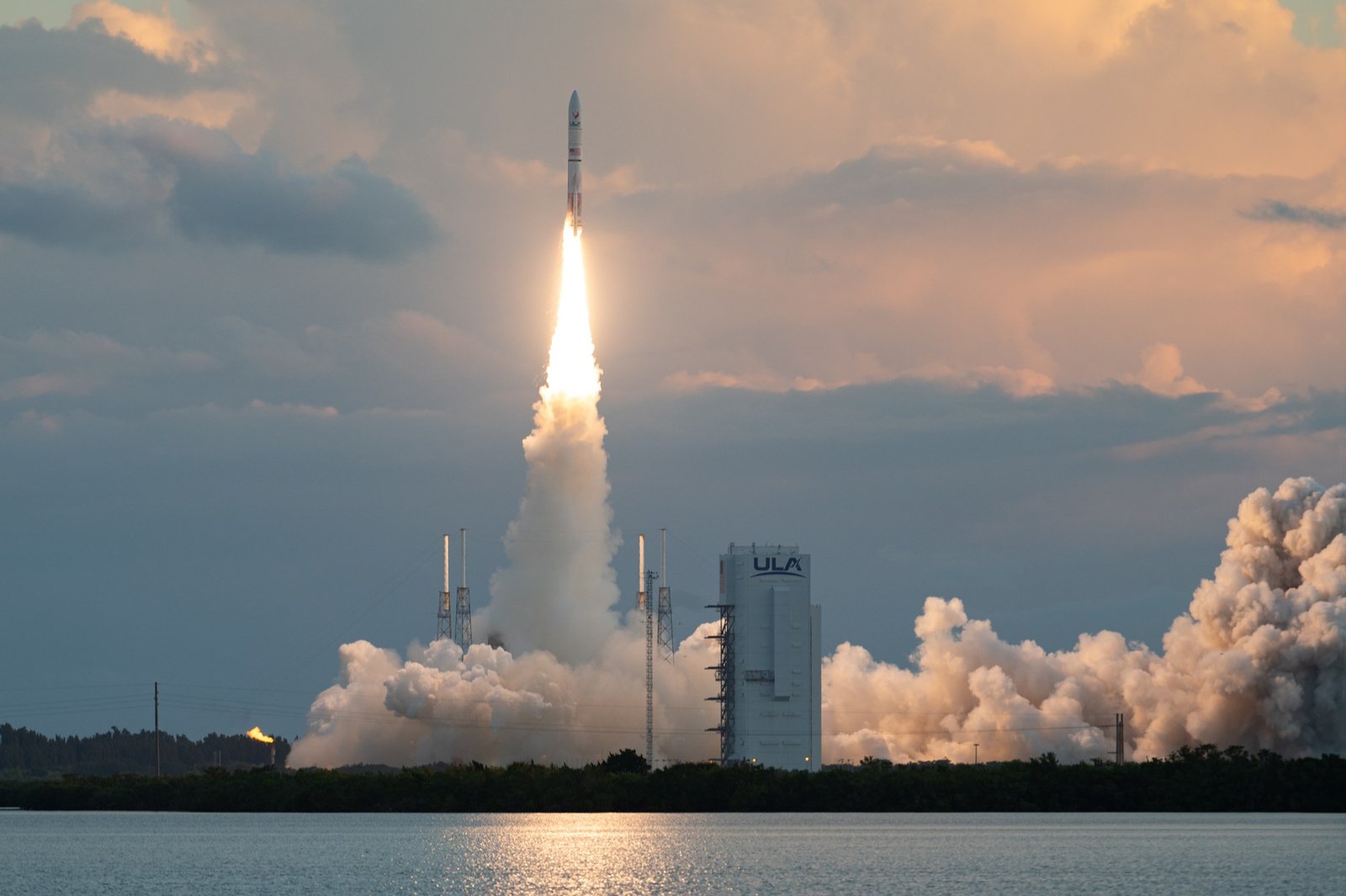
A United Launch Alliance Vulcan rocket failed on Sunday shortly after lifting off from Florida, destroying its payload of 40 satellites for Amazon’s Leo internet network in the launch company’s first outright mission failure.
The rocket lifted off from Space Launch Complex 41 at Cape Canaveral Space Force Station at 12:40 p.m. local time on Sunday 15 November. About ten minutes into the flight, during the burn of the Centaur V upper stage, the vehicle suffered an anomaly and failed to deliver the Amazon mission to orbit.
“Based on data received by our Launch Director, we confirm that the Vulcan vehicle launched from Space Launch Complex 41 suffered an anomaly 10 minutes into the flight and failed to deliver the Amazon mission to orbit,” ULA said in a statement issued about 50 minutes after liftoff. “We will work closely with our customer and other appropriate organizations to find the cause, determine the appropriate corrective action and return to flight as quickly as possible.”
It was the first outright failure of a ULA rocket since the company, a joint venture between Boeing and Lockheed Martin, was formed in 2006. It was only the fifth flight of Vulcan, the heavy-lift rocket that is replacing ULA’s Atlas V fleet, and its first in nine months. The vehicle had been grounded since February, when a solid rocket booster nozzle malfunction marred a national security launch, and a separate investigation into its BE-4 core engines had also delayed its return.
Sunday’s flight had appeared to go well at first. All six solid rocket boosters, supplied by Northrop Grumman, burned out and separated normally less than two minutes after liftoff, and the first stage, powered by two methane-burning BE-4 engines built by Blue Origin, fired as planned. The Centaur upper stage ignited and the payload fairing separated about six minutes into the flight, with the rocket travelling 95 miles above Earth east of Charleston, South Carolina, before the anomaly struck. ULA has not yet identified a cause, and a countdown hold with 20 seconds left on the clock to resolve a technical issue has not been linked to the failure.
The setback is a serious blow to Amazon’s Leo project, the satellite broadband network it is building to compete with SpaceX’s Starlink. Sunday’s mission, known as Amazon Leo 1, was the first of 38 Vulcan launches Amazon has purchased, and Vulcan is expected to carry more than 1,500 of the network’s first-generation satellites, more than any other rocket in the programme. Since 2025, 398 Leo satellites have been deployed across 14 launches, about 12 per cent of the 3,236 satellites Amazon needs for global service coverage.
Amazon’s next scheduled Leo launch is an Ariane 6 mission carrying 36 satellites, targeted for 23 November at the earliest. But the company will now have to wait for ULA’s failure investigation to run its course before it can fly again on Vulcan, and the failure is expected to lead to a lengthy technical inquiry that could keep the rocket grounded for months. NASA Administrator Jared Isaacman has offered his agency’s assistance with the investigation.
Sources: Reuters; Spaceflight Now (https://spaceflightnow.com/2026/11/15/ula-suffers-first-total-mission-failure-with-loss-of-vulcan-rocket-carrying-40-amazon-leo-satellites/); GeekWire (https://www.geekwire.com/2026/amazon-loses-40-leo-satellites-as-ula-vulcan-launch-failure-deals-setback-to-tech-giants-starlink-rival/). Note: the cause of the failure has not yet been established and remains under investigation.