







Experimental brain implants have helped two people living with amyotrophic lateral sclerosis, or ALS, recover something the disease had taken from them: a voice that sounds like their own. Researchers at the University of California, Davis, presented the findings at the Society for Neuroscience conference in Washington, in work first reported by The New York Times on 14 November.
The results suggest brain-computer interfaces are moving beyond laboratory demonstrations of basic communication and towards systems that can support natural, expressive conversation. “This system, for the first time, is good enough,” said Cindy Chestek, a biomedical engineer at the University of Michigan who was not involved in the research. “Good enough for real communication. It’s good enough to sing.”
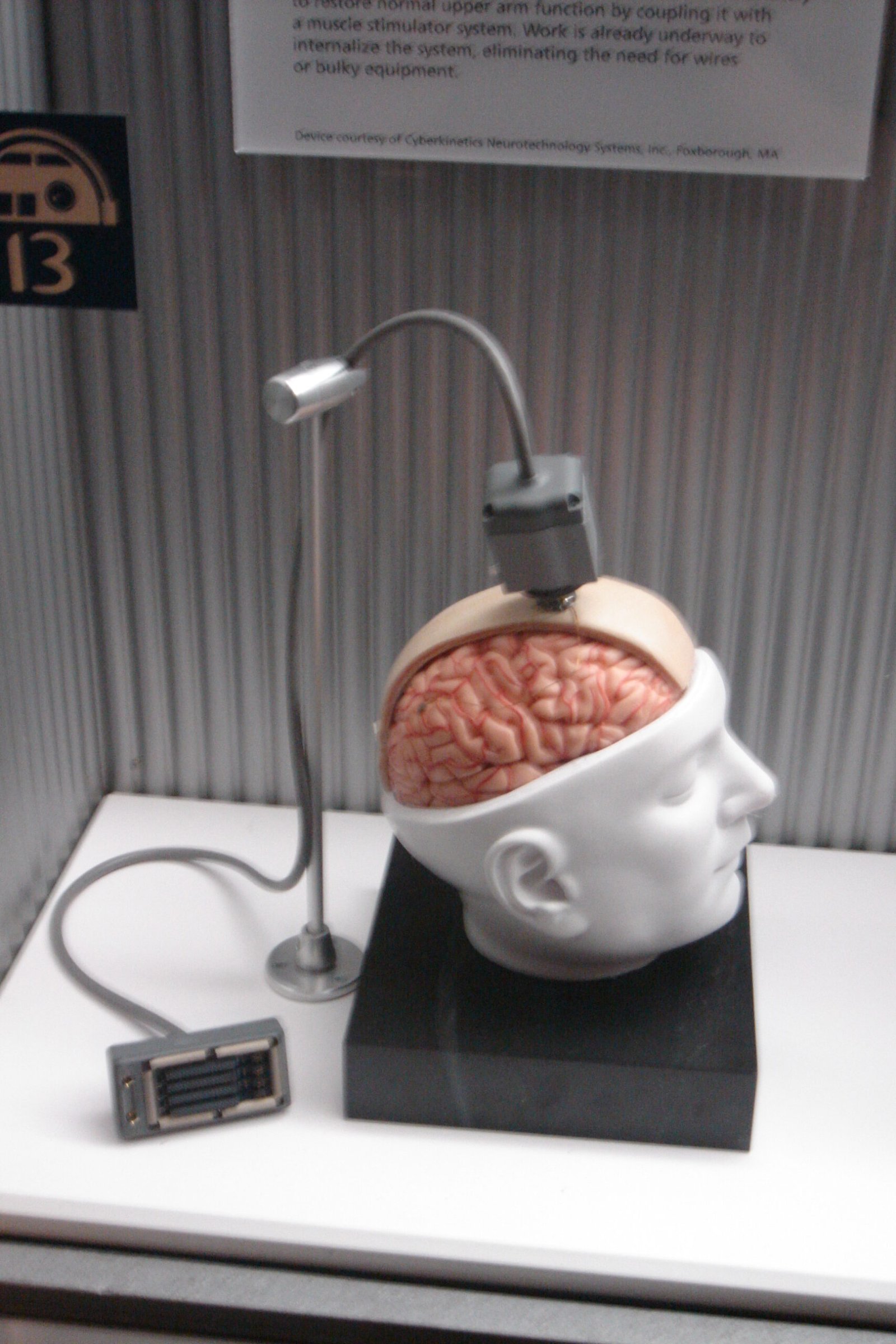
One participant, Casey Harrell, is a 47-year-old climate activist who lost his voice to ALS in his early forties. In 2023, UC Davis neurosurgeon David Brandman implanted four microelectrode arrays, containing 256 electrodes in total, in the speech motor cortex on the left side of his brain. The system records brain activity when Harrell tries to speak, decodes it into words, and reads them aloud in a synthetic voice modelled on recordings he made before the disease took his speech.
Harrell enrolled in the BrainGate2 pilot clinical trial and has used the system at home for nearly two years, without researchers present to run it. In research published in Nature Medicine in June, the team reported that he had communicated 183,060 sentences and almost two million words through the system, at an average rate of 56 words per minute, including messages to family and friends, emails and work-related browsing.
In a study published in Nature in 2025, the team showed Harrell’s brain signals could be turned directly into expressive speech with a delay of only about 10 milliseconds. But listeners could accurately transcribe little more than half of the words he produced. In the new work, described in a preprint, the researchers refined their algorithms and reanalysed the same data, reporting that word intelligibility could be increased to as much as 94%.
“This is a really clinically meaningful improvement and not just impressive machine learning,” said Christian Herff, who leads the Neural Interfacing Lab at Maastricht University and was not involved in the study.
The team’s second experiment focused on a different aspect of communication: vocal expression. A 58-year-old woman with ALS, identified only as T21, could no longer speak intelligibly when she entered the study. Researchers implanted 384 electrodes in her brain and asked her to attempt to sing and vary her vocal tone. The system allowed her to produce features of speech such as questioning or joyful intonation, and to sing a musical scale. The participant, a trained singer, cried with joy after the experience, according to the lead researcher, neuroengineer Maitreyee Wairagkar.
“They’re not just for essential communication, they’re expressive too; you can show more of your personality,” Wairagkar said.
The findings come with important caveats. The new results are preliminary and have not yet been published, and the improved intelligibility figure comes from reanalysing previously collected data rather than live use. Mariska Vansteensel, a brain-computer interface researcher at University Medical Center Utrecht, said further work would be needed to establish how well the system performs in real time and whether it works for people with different levels of speech loss. The findings so far also come from single participants.
Wider use will also depend on making the technology practical outside research settings. The current systems require participants to connect to a computer through ports in their skulls. Companies including Neuralink and Paradromics are developing wireless systems, but their performance remains to be established. The implants do not cure ALS or restore natural speech.
Sources: The New York Times, 14 November 2026 (full report: https://news.ssbcrack.com/brain-implants-enable-real-time-speech-and-singing-for-people-with-als/); University of California, Davis; Nature (2025); Nature Medicine (June 2026).